Bloating: 3 Stubborn Myths – and What the Studies Actually Show
Your stomach feels tight, your jeans suddenly sit tighter than they did this morning, and maybe you only ate a small portion: Bloating is one of the most common – and most misunderstood – everyday complaints out there. Roughly one in five people experience it at least occasionally. Plenty of myths circulate online about it, so let's look at what current studies actually show about causes, diet, and probiotics.
Want to see what a bacteria-rich gut routine can actually look like?
See Glow25 Balance →Table of Contents
Bloating or Gas? The Subtle but Important Difference
The two terms are often used interchangeably, but they describe two different things. With gas, digestive gases produced in the gut escape through the bowel – uncomfortable, but a sign that the air is finding its way out. With bloating (medically, meteorism), it's the opposite: the gases stay trapped between food matter in the intestinal loops and visibly stretch the abdominal wall, sometimes by several centimetres. That's exactly why bloating can occur without noticeable gas at the same time.
You can read more about the gut-wellbeing connection in our article What Longevity Really Means (and Why It's Not About Eternal Life).
3 Stubborn Myths About Bloating
Bloating means you're eating too much or gaining weight
In the vast majority of cases, bloating has nothing to do with fat gain. It's caused by gas and fluid in the gut, not fat tissue – and it usually resolves within a few hours. An evening bloated stomach says nothing about what you "actually" weigh.
FactThe distension comes from slower digestion trapping gas between food matter – not from the number of calories eaten.
Bloating and gas are the same problem
As described above, the two phenomena differ meaningfully in mechanism, even though both stem from gas building up in the gut.
FactGas means the air finds its way out. With bloating, that's exactly what fails to happen – the air stays "trapped" and pushes against the abdominal wall.
Only detox teas or "de-bloat" cures really work
Many "de-bloating cures" advertised online rely on anecdotes rather than controlled studies.
FactThe most robust current evidence points to multi-strain probiotics and soluble fibers like inulin – more on that in the next section.
What the Studies Actually Show: Probiotics & Fiber Put to the Test
Instead of vague marketing promises, it's worth looking at the actual evidence. We picked out three particularly informative, controlled studies – including one very recent trial from early 2026.
New Study (2026): Multi-Species Synbiotic in 350 Adults
In this randomized, placebo-controlled trial, 350 healthy adults with self-reported bloating/indigestion took a daily multi-species synbiotic (a probiotic blend plus pomegranate extract) or a placebo for 6 weeks. After 6 weeks, 72.3% of the synbiotic group reported never or rarely experiencing bloating, versus 55.9% in the placebo group (p < 0.001). Scores for gas/bloating and abdominal discomfort also improved significantly more than under placebo.
Source: Allegretti et al., Nutrients, 2026
View study on PubMed →Meta-Analysis (2020): Multi-Strain vs. Single-Strain Probiotics
This meta-analysis of multiple randomized controlled trials in adults with functional constipation specifically examined the effect on bloating symptoms. Result: only multi-strain probiotics (at least two bacterial strains) showed a statistically significant reduction in bloating versus placebo. Single-strain formulas did not reach statistical significance in the same analysis – a distinction many guides overlook.
Source: Zhang et al., Clinical Nutrition, 2020
View study on PubMed →Controlled Trial: Bifidobacterium infantis 35624 for Functional Bloating
In this triple-blind, placebo-controlled trial with 68 participants meeting Rome IV criteria for functional abdominal bloating, the specific strain B. infantis 35624 was taken for four weeks. Outcomes measured included severity and frequency of bloating, fullness, and quality of life.
Source: SN Comprehensive Clinical Medicine, 2025/2026
View study →Taken together, these studies paint a consistent picture: bacterial diversity appears to matter more than a single "miracle strain" – and soluble fibers like inulin, which feed those gut bacteria, sensibly complement that principle. Important to note: these studies were conducted with the specific products named and don't automatically translate to every supplement with similar-sounding ingredients.
Common Everyday Triggers
Before reaching for a routine, it helps to spot your own patterns. The most common everyday triggers for bloating:
Slow digestion
Lack of movement, low fluid intake, or a low-fiber diet slow the gut's transit time – giving bacteria more time to produce gas.
Certain foods
Cabbage-family vegetables, legumes, sugar substitutes (sorbitol, xylitol) and carbonated drinks are suspected culprits – though amount usually matters more than the food itself.
Stress
Few organs respond as sensitively to stress as the gut, since the autonomic nervous system also controls intestinal movement.
Hormonal shifts
In the second half of the cycle, progesterone relaxes the uterine muscles as well as the intestinal muscles – which is why bloating before your period is so common.
When to see a doctor: Occasional bloating is usually harmless. If it persists for several weeks, appears suddenly and unexplained, or comes with unintended weight loss, blood in stool, severe ongoing pain, or fever, it should be checked by a doctor – not addressed with supplements alone.
Balance for Your Gut
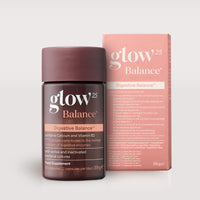
The studies above each examined specific, clinically tested products – their results don't transfer directly to other products. But they do show which ingredient categories current research is focused on: bacterial diversity (multiple strains) plus soluble fiber like inulin. Glow25 Balance combines exactly these two building blocks in one capsule.
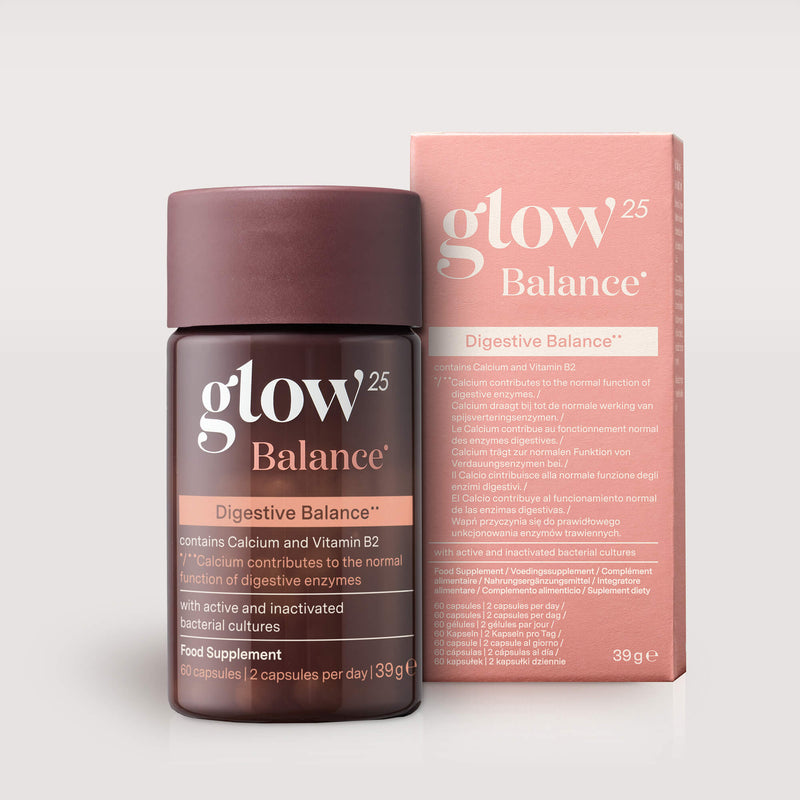
Glow25 Balance – Gut Balance Capsules
A 3-in-1 tribiotic formula of active and inactivated lactic acid bacteria, kiwi fruit powder, and inulin – with vitamin B2 and calcium.
- Active & inactivated lactic acid bacteria combined in one capsule
- Inulin and kiwi fruit powder as a natural fiber source
- Calcium contributes to normal function of digestive enzymes*
- Just 2 capsules a day, taken simply with water
*Health claim per the approved EU list. Vitamin B2 contributes to normal energy metabolism.
A verified Amazon customer review reports noticeably less bloating and a more comfortable digestive feeling after a few weeks of use – a pattern that lines up with the bacterial-diversity and fiber research described above, though it's a single individual experience rather than a controlled study.
Building More Variety Into Your Gut Routine
The effects observed in these studies appeared after several weeks of consistent use – not after a single dose. A few practical starting points for everyday life:
- Spread fiber variety across the day instead of relying on one single "miracle" ingredient
- Drink enough water – fiber needs fluid to do its job properly
- Eat more slowly and mindfully to swallow less air (aerophagia)
- Move regularly – even a short walk after eating can support digestion
- Stick with a chosen routine for at least 4–8 weeks before judging results
For a deeper look at gut health more broadly, see our article What Longevity Really Means (and Why It's Not About Eternal Life).
Frequently Asked Questions
What's the difference between bloating and gas?
With gas, digestive gases escape through the bowel. With bloating, they stay trapped between food matter in the intestines and visibly stretch the abdominal wall – often without gas occurring at the same time.
Why do I get bloated in the evening or after eating?
The most common cause is digestion slowing down over the course of the day: the gut moves food along more slowly, giving gut bacteria more time to produce gas. Swallowing air while eating quickly can also play a role.
Can probiotics really help with bloating?
Several randomized controlled trials show measurable improvements in bloating symptoms with probiotics, particularly multi-strain formulas. A meta-analysis found single-strain formulas did not reach statistical significance for the same outcome.
Which foods tend to cause bloating?
Strongly gas-forming foods such as cabbage-family vegetables, legumes, sugar substitutes (sorbitol, xylitol, mannitol) and carbonated drinks are suspected of contributing to bloating in sensitive people – though amount usually matters more than the food itself.
Is bloating before your period normal?
Yes, many women report a more bloated stomach in the second half of their cycle. The hormone progesterone relaxes the uterine muscles as well as the intestinal muscles, which can temporarily slow digestion.
When should I see a doctor about ongoing bloating?
Bloating that persists for several weeks, appears suddenly and unexplained, or occurs alongside unintended weight loss, blood in stool, persistent severe pain, or fever should be checked by a doctor rather than addressed with supplements alone.
Bloating is uncomfortable, but in the vast majority of cases it's harmless and has nothing to do with calorie intake. What the evidence shows: bacterial diversity and fiber appear to matter more than any short-term cure. Give a routine time – the effects observed in these studies showed up after weeks, not days.
Ready for more balance in your gut?
Glow25 Balance combines lactic acid bacteria, inulin, and kiwi fruit powder in one everyday capsule.
See Glow25 Balance ↑